If you have come across biodynamic massage and are not quite sure what it is, you are in good company. It is less widely known than a sports or Swedish massage, and the descriptions online tend to get abstract quickly.
Here is the plain version: where it came from, how it differs from a regular massage, and what actually happens when you book one.
Where biodynamic massage comes from
It was developed in the 1950s by Gerda Boyesen, a Norwegian psychologist and physiotherapist. She was interested in how periods of stress and difficulty seem to be held in the body, and in the kind of touch that helps the body let go of them.
What grew out of that is a form of bodywork that pays as much attention to how your body is responding as to the muscle under the hand. It has been practised in the UK for decades, and practitioners train for years rather than weekends.
What makes it different from a regular massage
Most massage follows a broadly set routine. The practitioner works through the body in a familiar order, at a fairly consistent pressure, with a clear idea of where the session is going before it starts.
Biodynamic massage is more responsive than that. The pace, the depth and the focus all change as the session unfolds, led by what your body is doing rather than by a plan. Touch might be light in one moment and firmer in the next, and there are often stretches where the hands simply rest.
The other difference is what the work is paying attention to. Alongside easing tight muscles, it is interested in helping your nervous system settle. That is usually why people describe a session as feeling deeper than the pressure alone would explain.
Traditionally, biodynamic practitioners also listen to the sounds of digestion with a stethoscope during a session, treating them as a signal that the body is unwinding.
What actually happens in a session
A first session is usually a little longer, because it starts with a proper conversation. Your practitioner will ask how you are, what brought you in and whether there is anything about your health they should know. There is no need to arrive with an explanation ready.
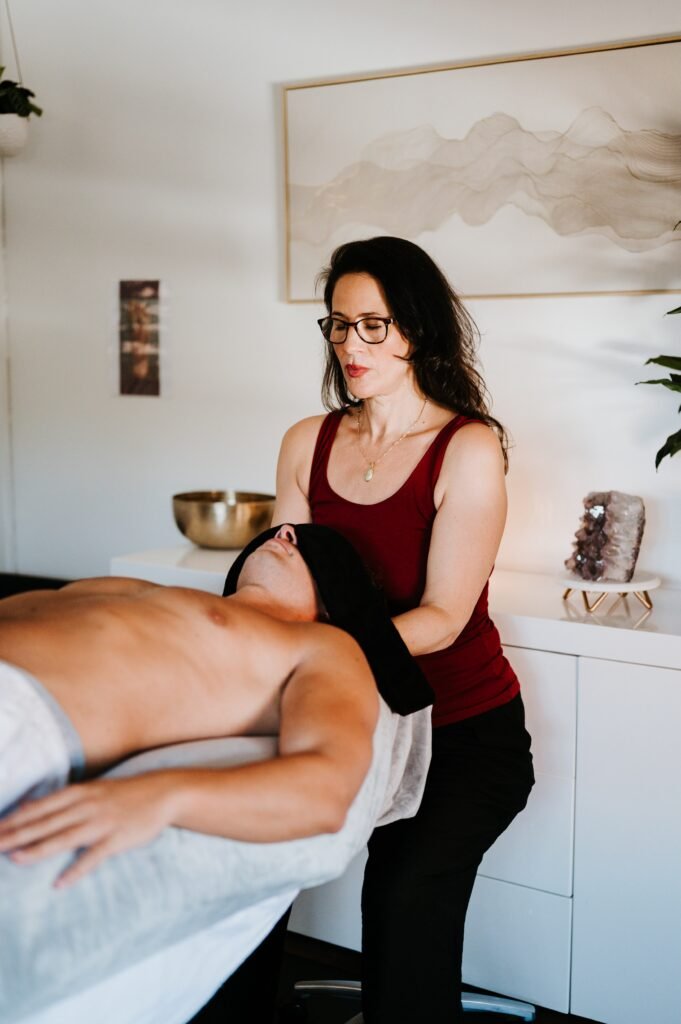
After that you settle on the couch in a warm, private room, with everything you need provided. The work begins slowly. Your practitioner will check in on pressure as they go, and you can say at any point that something is too much, or not enough.
Sessions are quieter than you might expect. Some people talk, many do not, and there is no right way to do it. Towards the end there is usually a few minutes of stillness before you get up, and then a short chat about how you found it, with any aftercare worth knowing.
How you might feel afterwards
The most common report is feeling settled and noticeably slowed down, in a good way. Plenty of people sleep well that night. Some feel tired the same evening, which tends to pass by morning.
Occasionally people find emotions surface during or after a session. If that happens it is an ordinary part of this kind of work, not a sign that anything has gone wrong, and your practitioner will have seen it many times before.
Drink some water, and if you can, avoid booking something demanding straight afterwards. The session tends to keep working for a while.
Who it tends to suit
People usually come to biodynamic massage for one of a few reasons: stress that has been running in the background for a long time, tension that keeps returning after other treatments, a difficult stretch of life they are coming out of, or simply wanting something slower than a standard massage.
It also suits people who are new to bodywork entirely and want something gentle to begin with.
Like other complementary therapies, it sits alongside medical care rather than replacing it. If you are being treated for something specific, keep your GP in the loop.
A few questions people often ask
Is it a massage or is it therapy?
It is a massage. It borrows its attention to the nervous system from a therapeutic tradition, but you are booking bodywork, not a talking therapy, and you are not expected to discuss anything you would rather not.
Do I have to talk during the session?
No. Some people chat, most settle into quiet. Your practitioner will follow your lead.
How many sessions will I need?
There is no set number. Some people come once, others build it into their month. It is worth seeing how you feel a few days after the first one before deciding.
Is it suitable if I have never had a massage before?
Yes, and it is often a good place to start. The pace is unhurried and nothing happens without being explained first.
Trying it at Soma
Biodynamic massage at Soma is offered by Layla Evans, who founded the centre and has over twenty years in bodywork. Sessions are 60 minutes at £60 or 90 minutes at £85, and if you are new to this kind of work the longer session gives you more time to settle.
You can read more on the biodynamic massage page, or if hands-on work is not what you are after, reflexology and Reiki are gentler alternatives. Still weighing it up? Our guide to choosing a treatment walks through all of them.