If you have never had reflexology, it can be hard to picture what you are booking. Most descriptions online spend a long time on theory and very little on the practical things you might actually want to know, such as what you take off, where you sit, and whether it tickles.
So here is the plain version: what reflexology is, what happens from the moment you arrive, and how people tend to feel when they leave. The order below follows how Safiya Waley, who offers reflexology at Soma, runs a first session.
What reflexology is
Reflexology is a complementary therapy in which a practitioner uses their thumbs and fingers on the feet, using pressure and small, deliberate movements. It can also be done on the hands, face and ears, but the feet are the most common.
The practice has roots in several cultures, and its modern form is usually traced to the American physiotherapist Eunice Ingham, who developed it in the 1930s. It rests on a tradition that maps areas of the feet to areas of the body, and you will see those foot charts in most treatment rooms.
It is worth being clear about what that map is. It is the tradition the practice is built on, not an established medical fact, and reflexology is not a treatment for any condition. People come for a different reason: many find it deeply relaxing and restorative, and they enjoy an hour of quiet, attentive care.
Before you arrive
There is very little to prepare. Wear trousers or a skirt that are easy to roll up or move out of the way, and come as you are. There is no need to do anything special to your feet, and practitioners have seen every kind of foot there is.
If you have a foot injury, a verruca or an infection, or you are unwell on the day, mention it when you book or before you start, so that the session can be adapted or moved.
What happens at the appointment
Your first session begins with a short consultation. Safiya will ask about your medical history, your general lifestyle, any reasons the treatment might need adapting, and anything you would like to mention. You do not need to have a reason for coming beyond wanting to try it.
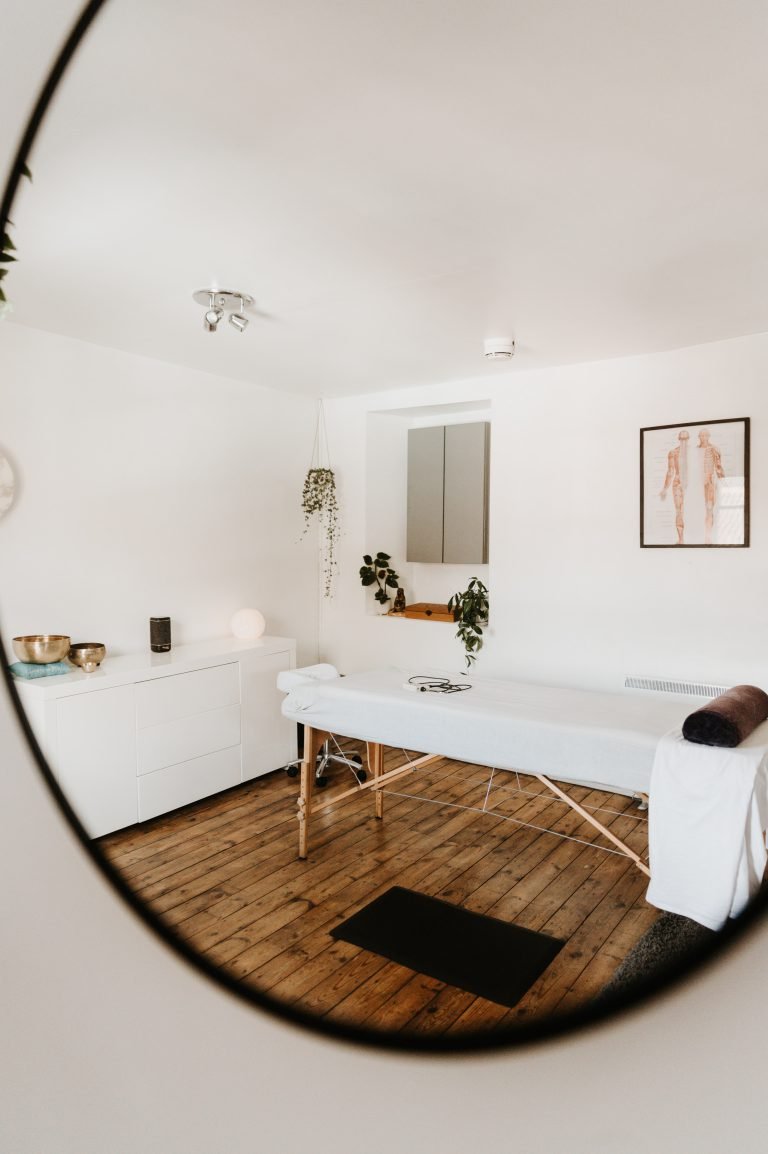
The treatment takes place on a massage couch, and you can sit upright or recline, whichever you find more comfortable. You take off your socks and roll up your trousers, and otherwise you stay fully clothed. For many people this is the appeal, particularly if undressing for a massage does not feel right for them.
Your feet are cleansed first and a little reflexology wax is applied. The treatment then starts with gentle holds, which give you time to ease in before anything firmer happens.
From there Safiya works through the feet, ankles and lower legs using a firm pressure, checking in with you as she goes. If something is too much, or not enough, say so at any point. Some people chat for the first few minutes and many settle into quiet. Either is fine, and some people fall asleep.
Time is left at the end for you to return to the room slowly, rather than sitting up and heading straight for the door.
What it feels like
The pressure is firm but it should not feel like a deep tissue massage. People often describe it as a steady, focused feeling, and some spots can feel a little more tender than others on the day. That is simply how feet are, and a tender spot does not tell you anything about your health.
If your feet are ticklish, tell Safiya at the start. Firm, slow pressure tends to feel quite different from a light touch, and most people who worry about this find it is less of a problem than they expected.
How you might feel afterwards
Many people leave feeling relaxed, slowed down and a little lighter on their feet. Safiya describes it as a walking-on-air feeling. Some feel more tired than usual that evening, which tends to pass by the morning.
Drink some water, and if you can, leave yourself a gentle hour afterwards rather than rushing to something demanding. A Saturday afternoon appointment makes that fairly easy.
Like other complementary therapies, reflexology sits alongside medical care rather than replacing it. If you are being treated for something specific, keep your GP in the loop.
A few questions people often ask
Do I have to take anything off apart from my socks?
No. You take off your shoes and socks and roll up your trousers, and you stay fully clothed otherwise.
Will it tickle?
Usually not. The pressure is firm and steady, which tends not to tickle. If you are very ticklish, say so at the start and the touch can be adjusted.
Can a reflexologist tell me what is wrong with me?
No. A reflexologist does not diagnose anything, and a sore spot on your foot is not a sign of a health problem. If you are worried about your health, your GP is the right person to ask.
How long should I book?
A first appointment at Soma is 60 minutes, which leaves room for the consultation. A shorter 30 minute session is available once you have been before.
How often should people come?
There is no set number. Some come once as a treat, others book in from time to time. See how you feel a few days after the first one before deciding.
Reflexology at Soma
Safiya Waley holds an iTEC Level 3 Diploma in Reflexology, trained at Yve Holistic Training in Norwich, and is a member of the Association of Reflexologists. She is at Soma on Saturday afternoons from 2pm to 6pm.
A 60 minute session is £60, and that is the one to book for your first visit. After that, a 30 minute session is £40, and a block of four one hour sessions is £200. Use the code RESTOREWELCOME when booking for 10% off your first treatment.
You can read more on the reflexology page. If you are drawn to something else that lets you stay clothed, Reiki is another gentle option. Still weighing it up? Our guide to choosing a treatment walks through all of them.