“Holistic massage” is one of those terms that appears on every therapist’s price list and is almost never explained. If you have been scrolling through options and cannot work out how it differs from an ordinary massage, that is a reasonable place to be.
Here is the plain version: what the word is actually doing, what happens in a session, and who tends to book one.
What the word holistic is doing
Holistic simply means treating the whole, rather than one part in isolation. In massage, it describes an approach rather than a particular set of strokes. A sports massage therapist is usually working on a specific problem: a tight hamstring, a shoulder that will not rotate. A holistic massage starts further back, with how you are in general.
That is why a holistic session almost always begins with a conversation. How have you been sleeping. What is your work doing to your shoulders. Have you been unwell, or under strain, or sitting more than usual. The massage that follows is shaped by the answers.
It is worth saying what this does not mean. Holistic is not a protected term, and it does not imply any medical training. What it does reliably tell you is that the therapist intends to treat you as a person rather than a presenting problem.
How it differs from a regular massage
In practice there are three differences people notice.
The pressure varies more. Most holistic therapists move between light and firm work within one session, following what the body seems to want, rather than holding one depth throughout.
It usually covers more ground. A back, neck and shoulder massage does what it says. A full holistic session often takes in the legs, arms, hands, scalp and face, because tension rarely stays politely in one area.
Oils are often chosen for you. Many holistic therapists train in aromatherapy as well, and blend oils for the session based on that opening conversation. If that matters to you, ask when you book.
What actually happens in a session
A first appointment usually runs a little longer than the massage itself, to leave room for the consultation. Expect questions about your health, any medication, recent injuries or surgery, and what you would like from the hour.
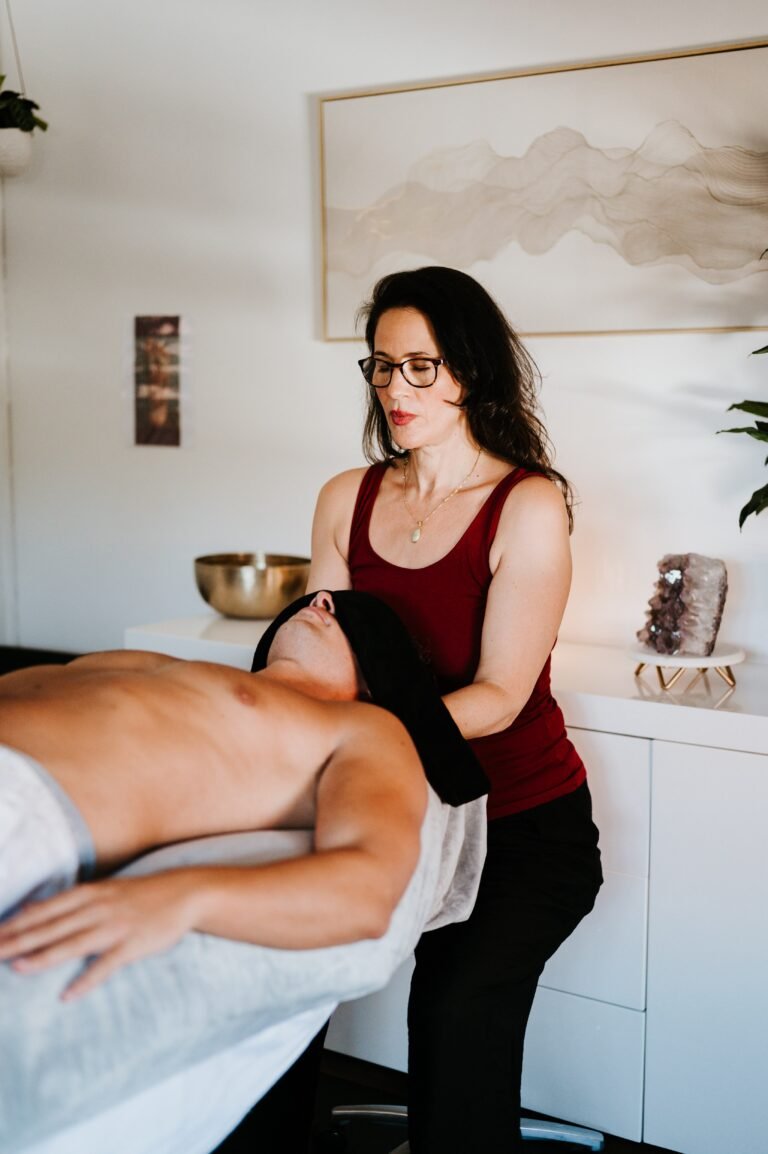
You undress to your comfort level, usually to underwear, and lie on a couch under towels. You are covered throughout, and only the area being worked on is uncovered at any one time. Say so if you are cold, or if the pressure is not right. A good therapist would rather be told than guess.
The massage itself tends to be slower than a sports treatment. Many people stop talking after the first few minutes, and some fall asleep, which is entirely normal and not something to apologise for.
At the end you are left for a moment to come round rather than being hurried off the couch. Most therapists will suggest drinking some water and taking the rest of the day gently if you can.
How you might feel afterwards
Most people feel loosened and a little slowed down, sometimes for the rest of the day. If deeper work was done on a tight area, that area can feel mildly tender the next day in the way muscles do after unfamiliar exercise.
Some people find they sleep unusually well that night. Others feel more tired than expected. Both are common, and both tend to pass within a day.
Who tends to book one
From what therapists see, holistic massage suits people who are generally worn down rather than specifically injured. Long stretches of stress. Poor sleep. A body that aches in several places at once without one obvious cause.
It also suits people new to massage, because the pace is unhurried and nothing is done without being explained first. If you know exactly which muscle is the problem and want it worked on hard, a sports or deep tissue massage is the better fit.
A few questions people often ask
Is holistic massage the same as Swedish massage?
Not quite. Swedish massage describes a set of techniques, and most holistic therapists use them. Holistic describes the approach wrapped around those techniques, including the consultation and the choice of what to work on.
Do I have to get undressed?
For a full body massage, usually to underwear, and you are covered with towels the whole time. If that is not for you, a back, neck and shoulder session only means undressing your top half, and for reflexology you only take off your socks and roll up your trousers.
How long should I book?
An hour is the usual starting point. Forty five minutes is enough for back, neck and shoulders. Ninety minutes is worth it if you want the whole body covered without anything feeling rushed.
How often should I go?
There is no correct answer. Some people come once when they need it, others settle into something monthly. See how you feel a few days after the first one before committing to a pattern.
Holistic massage at Soma
At Soma, holistic massage is offered by Emma Foster, who holds a Level 3 Diploma in Massage and a Level 3 Diploma in Aromatherapy, and who works with women through every stage of life. Her massage sessions are for women.
Sessions run 45 minutes at £45, 60 minutes at £55 and 90 minutes at £75, with a 30 minute face, scalp and neck treatment at £35. She is at Soma on Monday mornings.
If you are looking for something similar and Emma’s sessions are not the right fit, the relaxing massage page lists the other therapists working at the centre. Still weighing it up? Our guide to choosing a treatment walks through all of them.